Loneliness, AI, and the Loss of Human Connection

Are We Becoming More Connected—or More Alone? Loneliness, AI, and the Loss of Human Connection
In a world shaped by AI-powered customer service, social media, and constant digital communication, many people are beginning to ask an important question: is technology making us more connected—or more lonely?
We can reach one another instantly. We can message, react, scroll, and communicate across distance with ease. And yet many people describe feeling increasingly lonely and emotionally disconnected. I hear this almost every day in my therapy office—people who want connection, yet feel unsure how to reach for it.
Technology promises convenience, speed, and efficiency. But in many cases, it quietly replaces the very thing we need most: human interaction. The small moments of contact—a conversation with a stranger, a warm exchange with a server, a genuine voice on the other end of the phone—are slowly disappearing.
And I find myself wondering: what happens to relationships when even our smallest interactions lose their human touch?
In the reflections that follow, I want to explore how artificial intelligence, automation, and the pace of modern life may be reshaping the way we connect—and what this might mean for our emotional lives and relationships.
AN AI RESERVATION THAT LEFT ME STRANGELY DISCONNECTED
While visiting Montreal, I called a restaurant to make a reservation for two people—and our dog. The restaurant is dog-friendly, and you can even sit inside with your dog, which felt exciting to me.
A pleasant woman’s voice answered the phone. But within moments, I realized I wasn’t speaking to a person—it was an AI system. I found myself repeating details several times, especially about the dog, unsure whether the system truly understood what I was saying.
The reservation was made. Technically, everything worked.
Emotionally, something didn’t.
Later, when our dinner plans changed, I noticed something unexpected: I felt no obligation to call and cancel. No guilt. No sense of responsibility. No feeling of connection to the place at all.
It was as if the restaurant didn’t quite exist for me—because I had never connected with anyone there.
That stayed with me.
Experiences like this are becoming increasingly common as more everyday interactions shift toward automated systems. Restaurants, banks, airlines, and many other businesses are adopting AI-powered tools to handle routine communication with customers.
Industry forecasts suggest that by 2025, 80% of customer service and support organizations will use generative AI in some form, reflecting how quickly automation is reshaping the way businesses interact with people.
In many ways, this shift makes sense. Automation can make services faster and more efficient. But moments like the one I experienced in Montreal made me wonder what might quietly disappear when even our smallest interactions no longer involve another person.

The reservation was made. Technically, everything worked.
WHY THIS MATTERS TO ME AS A RELATIONSHIP THERAPIST
I’m a relational therapist, and my work centers on the ways people connect with one another—how we reach each other, how we miss each other, how we repair misunderstandings, and how deeply we depend on relationships to feel emotionally well.
Humans are wired for connection. We want to be heard. We want to feel understood. We want to know that the person on the other side of an interaction is truly present with us.
During that phone call, I realized something subtle but meaningful: there was no space for the kind of small human exchanges that naturally unfold in conversation.
For example, I would normally have shared things like:
that I was coming with a dog
that she’s anxious around other dogs
that being seated a bit farther away would help
that I was genuinely grateful they allowed dogs inside
With a real person, these details would naturally emerge. There would be room for dialogue. A moment of reassurance. Maybe even a smile in the other person’s voice.
Instead, the interaction felt flat and transactional—efficient, but relationally empty.
And for someone who spends her days helping people rebuild connection, that absence felt significant.
THE LONELINESS I HEAR ABOUT IN THERAPY
So many of my clients talk about loneliness. Not necessarily a lack of people in their lives, but a lack of meaningful connection.
They want relationships. They want to feel close to others. And yet many feel unsure how to initiate that closeness. They worry about being awkward, misunderstood, or rejected. Reaching out can feel vulnerable and risky.
In many ways, our digital tools make it easier to avoid that risk.
Phones and social media allow us to stay at a distance. We can observe without engaging. React without responding. Remain connected without truly being seen.
But the emotional cost can be significant.
We message instead of talking.
We scroll instead of relating.
We stay “in touch” without truly touching each other emotionally.
And now, as AI begins to replace even basic customer service interactions, we lose more of the everyday human moments that once reminded us we belong.
We message instead of talking.
We scroll instead of relating.
We stay “in touch” without truly touching emotionally.
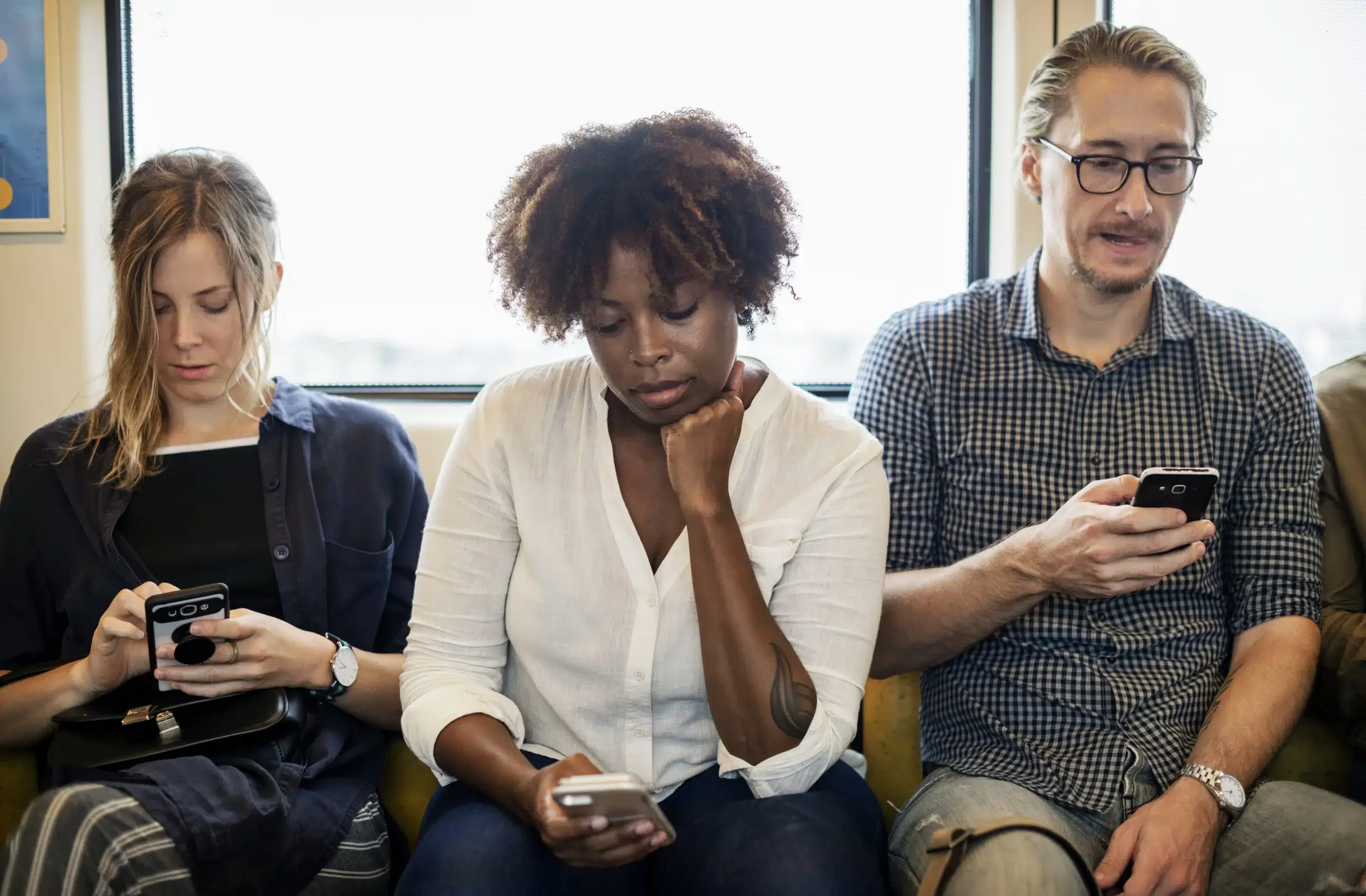
We message instead of talking.
We scroll instead of relating.
We stay “in touch” without truly touching emotionally.
WHAT WE LOSE WHEN HUMAN INTERACTION BECOMES AUTOMATED
We often underestimate how much small interactions matter.
A friendly voice.
A shared laugh.
A brief exchange that feels human.
These moments may seem insignificant, but they play an important role in our emotional lives. Small interactions help regulate us. They ground us. They remind us that we exist in relationship with other people.
When those moments quietly disappear, loneliness doesn’t arrive dramatically. It settles in gradually.
Life becomes more efficient—but emotionally thinner.
The Montreal reservation wasn’t upsetting. It was something subtler.
It was empty.
And this isn’t just a personal impression. Some researchers studying the broader social impact of artificial intelligence have raised similar concerns. One academic review suggests that as AI replaces situations where people once interacted face-to-face, opportunities for everyday human closeness may quietly diminish.
In other words, what we risk losing isn’t just conversation—it’s the subtle sense of belonging that comes from being recognized by other people in ordinary moments.
WHY SMALL HUMAN INTERACTIONS MATTER MORE THAN YOU THINK
In therapy, we often talk about relationships in terms of close bonds—partners, family members, close friends. But much of our emotional life is shaped by the smaller interactions that happen throughout an ordinary day.
A brief conversation with a barista.
A neighbor saying hello.
A receptionist who remembers your name.
These moments may seem fleeting, but they help reinforce a quiet psychological truth: that we are seen, recognized, and part of a shared social world.
When these interactions are warm, even briefly, they can lift our mood and help us feel more grounded. When they disappear, something subtle shifts. The world can begin to feel more anonymous, more transactional, and less relational.
And over time, that subtle shift can contribute to the sense many people describe today—that we are surrounded by people, yet somehow still alone.

When these interactions are warm, even briefly, they can lift our mood and help us feel more grounded. When they disappear, something subtle shifts. The world can begin to feel more anonymous, more transactional, and less relational.
ARE WE DRIFTING TOWARD A MORE DISCONNECTED WORLD?
I don’t believe technology is the enemy. Many of the tools we use every day genuinely make life easier and more accessible.
But I do wonder what happens when efficiency becomes the primary goal of our interactions.
When systems are designed to remove friction, they often remove conversation as well. The small pauses where people once acknowledged each other—asked a question, shared a brief moment of warmth, or simply recognized another person’s presence—begin to disappear.
Over time, this can subtly reshape how we move through the world. Interactions become faster, smoother, and more efficient. But they can also become more anonymous.
And when connection becomes something we only experience in a few close relationships—rather than something woven throughout everyday life—the emotional landscape begins to change.
We may be more technologically connected than ever before, yet many people describe feeling increasingly alone.
Connected—but not connecting.
Seen—but not known.
Efficient—but emotionally undernourished.
WHY THESE CONVERSATIONS OFTEN SHOW UP IN THERAPY
Questions about connection, loneliness, and emotional distance are not abstract ideas in my work—they are the very things many people bring into therapy.
People come in describing a feeling that something in their relationships has shifted. They may have friends, partners, colleagues, and full digital lives, yet still feel strangely alone. They talk about wanting deeper connection but feeling unsure how to reach for it, or how to sustain it once they do.
Often the challenge is not a lack of desire for connection. It’s uncertainty about how to move toward it—especially in a world where many interactions have become faster, more mediated, and less personal.
In therapy, we slow this process down. We explore how people relate to one another, what makes connection feel safe or difficult, and how everyday interactions shape our sense of belonging. Small shifts in awareness, communication, and vulnerability can often reopen pathways to connection that once felt closed.
For many people, simply having a space where their emotional experience is heard and understood becomes the first step toward rebuilding meaningful connection in their lives.
CHOOSING HUMAN CONNECTION, ON PURPOSE
We don’t need to reject technology to preserve human connection. But we may need to become more intentional about how we relate to one another within a world that increasingly prioritizes speed and efficiency.
Connection rarely disappears all at once. More often, it fades in small ways—when we stop making eye contact, when conversations become purely transactional, or when reaching out begins to feel unnecessary.
Rebuilding connection doesn’t require dramatic change. It often begins with small choices that invite more presence into everyday life.
That might mean:
calling instead of texting when something meaningful needs to be said
choosing a human interaction when one is available
allowing a brief conversation to unfold, even when it feels slightly awkward
letting yourself be seen in ordinary moments
Relationships are built in exchanges. In dialogue. In smiles and laughter. In the subtle ways we affect one another simply by being present.
Connection is rarely dramatic.
It is simply human.
CONCLUSION: WHY HUMAN CONNECTION STILL MATTERS
As artificial intelligence, automated customer service, and digital communication continue to expand, the question isn’t whether technology will remain part of our lives—it certainly will. The deeper question is how we preserve the human experiences that sustain our emotional well-being.
Loneliness is not a personal failure. It is often a signal that something in our relational world needs attention, care, and understanding. Many people today are navigating a quiet tension between the efficiency of modern life and the deeper human need to feel seen, heard, and connected.
Rebuilding connection rarely requires dramatic change. It often begins with small moments of awareness, curiosity, and openness toward others—and toward ourselves.
If the ideas in this reflection resonate with you, therapy can be a place to explore them more deeply. In my work, I support individuals and couples who want to better understand their relationships, strengthen emotional connection, and move through feelings of loneliness or disconnection with greater clarity and compassion.
If you’d like to explore this work together, you can schedule a consultation with me below: